




Getting your POS connected to accounting is relatively easy. Keeping it accurate is the hard part.

Every restaurant transaction creates financial data: discounts, split payments, gift cards, taxes, and refunds. Then the business changes. New menu items arrive, revenue categories get reorganized, payment methods are added, locations open, and the employee who authorized system access leaves. If the integration doesn’t change along with the business, a connection that worked perfectly yesterday starts producing mapping errors and reconciliation gaps tomorrow. The integration isn’t the weak point. Change is.
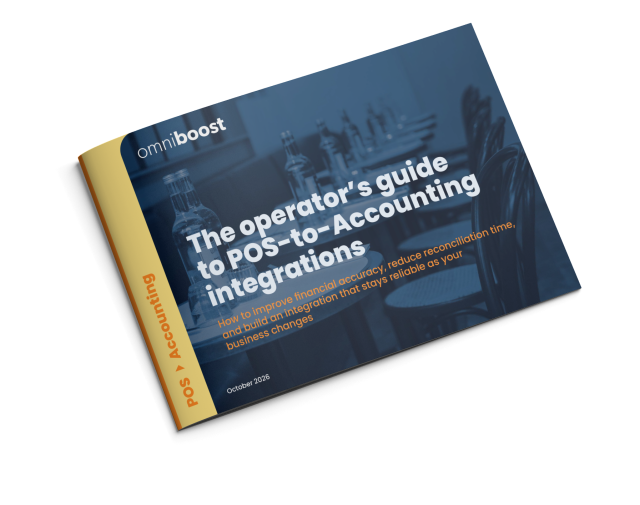
Download the Guide

What's inside

  • Why most downstream accounting issues start upstream in the POS

  • Why every implementation needs a clear owner, and what that person is responsible for

  • How to treat mapping as a living part of the integration, not a one-time setup task

  • How to set up reconciliation so finance knows which reports to compare, and when

  • The access and authorization risks that stop data from flowing without warning

  • How to build your first location as the model for your twentieth, with setup and maintenance checklists and questions to ask your provider

Go-live isn’t the finish line

Restaurants are always changing, and every change to the POS or accounting system can affect your financial data. A new revenue category with no mapping, a revoked credential, or an open receipt that blocks the end-of-day close can each show up later as missing data. Operators who keep their numbers reliable treat the integration as part of ongoing operations, not as a project they finished once.

Built on experience from 10,000+ integrations

Omniboost connects POS and accounting platforms for hospitality groups of every size, from single restaurants to multi-location rollouts. This guide is based on the patterns our teams see in implementation and support: what goes wrong after go-live, and how to stop it from happening.

Get the full picture

Download "The Operator’s Guide to POS-to-Accounting Integrations" and build an integration that stays reliable as your business changes. You’ll get the foundation, mapping, reconciliation, and governance practices that keep financial data flowing accurately well beyond the first month.